My First Himalayan Trek: What Nobody Told Me Before I Started
I thought I was prepared for my first Himalayan trek.
I had bought hiking shoes, packed warm clothes, downloaded maps, watched videos, and read enough trekking articles to convince myself that I knew what I was getting into.
I was wrong.
Not completely wrong. I had done the basic preparation, and I knew trekking in the Himalayas would be physically demanding.
What I didn’t understand was how different a multi-day trek would feel compared with a normal hike.
There were moments when I felt stronger than expected, moments when I questioned my decision, and moments when I simply stopped walking to look around and thought, “This is exactly why I came.”
Looking back, the trek taught me far more than I expected.
Before the Trek: The Confidence Stage
The first mistake I made was being too confident.
I had done plenty of walking before the trip.
I considered myself reasonably fit.
I could walk for several hours without much trouble, so I assumed I would be fine.
Then I looked at the itinerary.
Several hours of walking every day?
Easy.
That was my attitude.
I didn’t fully appreciate that trekking isn’t simply about walking for a long time.
You’re walking uphill.
Then downhill.
Then uphill again.
You’re carrying a backpack.
You’re doing it several days in a row.
And depending on the route, you’re gradually gaining altitude.
Those details make a huge difference.
Packing My Bag
Packing was another adventure.
I started with the idea that I should prepare for every possible situation.
Then my bag became ridiculously heavy.
I packed extra clothes, gadgets, snacks, toiletries, and things I never actually needed.
Eventually, I removed several items.
That was one of my first useful lessons:
You don’t need everything you own just because you’re going into the mountains.
The right clothing layers were much more useful than having lots of clothing.
A comfortable base layer, insulating layer, waterproof outer layer, good socks, and appropriate footwear were more valuable than carrying several unnecessary outfits.
The First Day Felt Easy
The first day of the trek was surprisingly enjoyable.
The excitement was doing most of the work.
Everything felt new.
The trail.
The villages.
The scenery.
The sound of rivers.
The suspension bridges.
Even the uphill sections didn’t seem particularly difficult.
I remember thinking that perhaps I had exaggerated how challenging trekking would be.
That thought didn’t age well.
The Mountains Changed Gradually
One thing I loved about trekking was watching the landscape change slowly.
On the first sections, there were green hills, forests, farmland, and villages.
As we continued higher, the environment became different.
The vegetation changed.
The air became cooler.
The mountains became larger.
The villages became smaller and more spread out.
Unlike arriving at a viewpoint by car, trekking allowed me to experience every change gradually.
That made the scenery feel much more meaningful.
The Second Day: Reality Arrived
By the second day, my legs were starting to complain.
Nothing serious.
Just the familiar soreness that tells you yesterday’s confidence may have been slightly misplaced.
The uphill sections became more noticeable.
I also discovered that walking slowly is not the same thing as walking badly.
At first, I tried to keep up with the faster people.
That was unnecessary.
Everyone has a different pace.
Once I slowed down, I felt much better.
I started taking smaller steps and focusing on maintaining a steady rhythm instead of trying to cover the trail quickly.
That became one of the most important lessons of the entire trek.
Slow Is Not the Same as Weak
Before the trek, I imagined experienced trekkers as people who walked quickly and rarely stopped.
The reality was different.
Experienced trekkers often moved steadily.
They didn’t waste energy trying to prove anything.
They knew when to stop.
They drank water regularly.
They adjusted their pace.
They understood that the goal wasn’t to win a race.
The goal was to arrive safely.
I eventually adopted the same approach.
The First Night in the Mountains
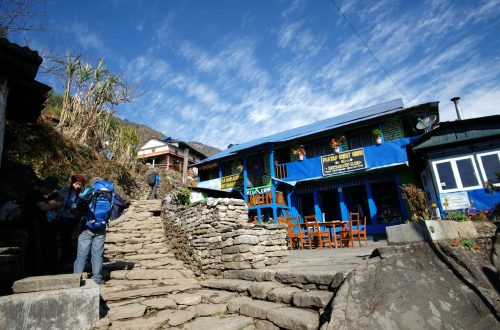
That evening, I stayed in a simple mountain lodge.
It wasn’t luxurious.
The room was basic.
The facilities were much simpler than what I was used to at home.
And yet I slept surprisingly well.
There was something satisfying about reaching the end of a long day, putting down your backpack, eating a warm meal, and knowing you had earned the rest.
Dinner was simple but tasted incredible.
Maybe hunger improves everything.
Or maybe food simply tastes better after several hours on a trail.
Probably both.
The Altitude Started to Matter
As we climbed higher, altitude became something I paid much more attention to.
At lower elevations, I could walk and talk normally.
Higher up, I noticed myself becoming more tired.
A climb that would normally feel easy required more effort.
This was when I realized that altitude isn’t simply about fitness.
You can be very fit and still struggle when your body is adjusting to less oxygen.
That is why acclimatization is so important on high-altitude treks.
The itinerary shouldn’t be designed around moving upward as quickly as possible.
Your body needs time to adapt.
My Biggest Mistake: Not Drinking Enough
I normally don’t drink enough water during the day.
That habit became a problem during the trek.
I would get busy walking and forget.
Then I would realize I hadn’t had enough water for hours.
Once I became more disciplined about hydration, I felt considerably better.
It sounds like a small thing, but small habits matter when you’re walking for hours every day.
The Weather Didn’t Care About My Plans
Another lesson came from the weather.
At home, checking a weather forecast gives you a reasonable idea of what the day might look like.
In the mountains, conditions can change quickly.
One moment could be sunny.
Later, clouds could move in.
Temperatures could drop.
Wind could become stronger.
Rain or snow could appear depending on the elevation and season.
I stopped thinking of weather as something I could control.
Instead, I learned to prepare for changing conditions.
That meant carrying appropriate layers and waterproof protection even when the morning looked perfect.
The People Made the Trek Special
The mountains were incredible, but the people were a major part of the experience.
I met trekkers from different countries.
Some were traveling alone.
Some were with friends.
Some had extensive trekking experience.
Others, like me, were figuring things out as they went.
We often exchanged simple conversations on the trail.
Where are you from?
How long have you been trekking?
Where are you staying tonight?
How was the trail?
Those small conversations made the trek feel less like a solitary physical challenge and more like a shared journey.
The Local Communities
The local people also left a strong impression on me.
Mountain communities have adapted to environments that are difficult in ways I hadn’t fully understood before arriving.
Seeing daily life in these villages changed my perspective.
The trail wasn’t simply a path between two tourist destinations.
It passed through places where people actually live, work, raise families, run businesses, and maintain traditions.
That made me much more conscious of how I behaved as a visitor.
I became more careful about waste, photography, noise, and respecting local customs.
The Day I Wanted to Quit
There was one day when I genuinely considered stopping.
My legs were tired.
The trail seemed to go upward forever.
The weather wasn’t ideal.
And the destination still seemed very far away.
For the first time, I understood why people say a trek is as much a mental challenge as a physical one.
I didn’t quit.
But I also didn’t try to act like I wasn’t struggling.
I slowed down.
Took a break.
Drank some water.
Ate a snack.
And continued.
Eventually, the difficult section ended.
That feeling of reaching the lodge that evening was incredible.
Not because I’d achieved some heroic feat.
Simply because I’d kept going.
The View Made Everything Worth It
Then came the moment I’d been waiting for.
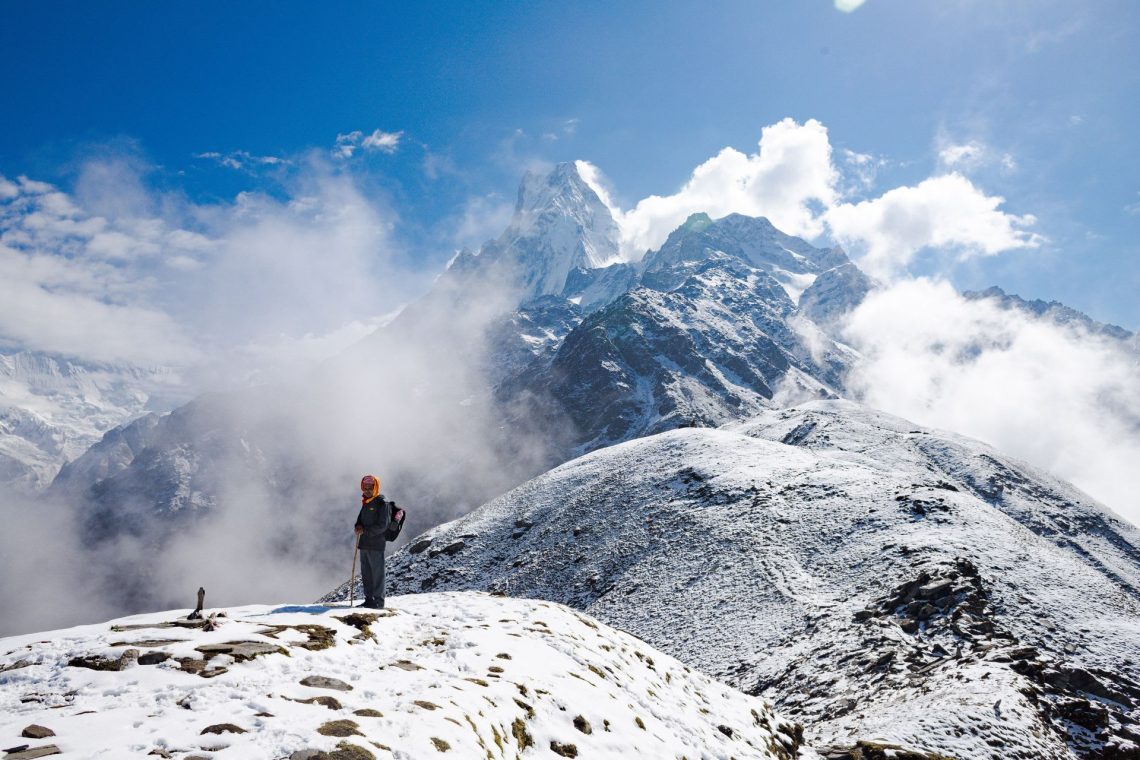
The mountains opened up in front of me.
I had seen similar views in photographs, but photographs couldn’t communicate the scale.
The peaks seemed enormous.
The valley stretched far below.
The sky was incredibly clear.
For a few minutes, nobody seemed interested in talking.
Everyone just stood there.
That was probably the quietest moment of the trek.
And one of the most memorable.
What I Wish I Had Known Before Trekking
Looking back, there are several things I wish someone had told me.
You Don’t Need to Walk Fast
Trying to maintain someone else’s pace is one of the easiest ways to make a trek unnecessarily difficult.
Find your rhythm.
Your Backpack Will Feel Heavier Than Expected
Pack carefully.
Every unnecessary item becomes something you’ll carry for hours.
Breaks Are Important
You don’t need to wait until you’re exhausted before stopping.
Short, regular breaks can make long walking days much easier.
Good Footwear Matters
Blisters can turn an enjoyable trek into a miserable one.
Break in your footwear before the trip and make sure it fits properly.
Altitude Changes Everything
Don’t assume that being fit means you’re automatically prepared for high altitude.
Follow the itinerary, acclimatize properly, and pay attention to how your body feels.
The Weather Can Change Quickly
Carry appropriate layers and rain protection even when the morning looks perfect.
You Will Probably Eat More Than Expected
Walking for hours burns a lot of energy.
Snacks become surprisingly important.
The Best Moments Aren’t Always at the Destination
Some of my favorite memories happened while walking between villages.
A mountain appearing through the clouds.
A quiet forest.
A conversation with another trekker.
A cup of tea during a break.
The destination was important, but the journey created most of the memories.
Would I Do It Again?
Without hesitation.
But I would prepare differently.
I’d train more specifically for uphill walking.
I’d pack lighter.
I’d pay more attention to hydration from the first day.
And I’d give myself more time rather than trying to fit a demanding trek into the smallest possible number of days.
Most importantly, I’d remember that trekking isn’t a competition.
My Advice to First-Time Trekkers
If you’re thinking about doing your first Himalayan trek, don’t let photographs of people standing at mountain viewpoints fool you.
You don’t see the tired legs in those photographs.
You don’t see the early mornings.
You don’t see the long uphill sections.
You don’t see the days when the weather doesn’t cooperate.
But you also don’t see the satisfaction of reaching your destination after hours of walking.
You don’t see the friendships formed along the trail.
You don’t see the quiet mornings in mountain villages.
And you don’t see the moment when you finally stop and realize just how far you’ve walked.
That’s the part I remember.
Final Thoughts
My first Himalayan trek wasn’t perfect.
I was tired.
I overpacked.
I underestimated altitude.
I didn’t drink enough water at first.
I had moments when I questioned my decision.
But that’s exactly why I remember it.
Travel doesn’t always need to be comfortable to be worthwhile.
Sometimes the difficult parts become the stories you tell years later.
I started the trek thinking the mountains would be the destination.
By the end, I understood that the real experience was everything between the beginning and the end.
The early mornings.
The aching legs.
The simple meals.
The changing weather.
The conversations.
The quiet trails.
The mountain villages.
And finally, standing somewhere high in the Himalayas and realizing that I’d made it there one slow step at a time.
If you’ve never trekked before, start with a route that matches your ability and prepare properly.
You don’t need to be an expert.
You don’t need to be the fastest person on the trail.
You just need to be prepared, patient, respectful, and willing to take the next step.
The mountains will take care of the rest.

You May Also Like
Best Places to Visit in Nepal for First-Time Travelers
10 Most Beautiful Mountain Destinations in Nepal